
∞
Rabbi Shir Meira Feit is an intuitive, gifted, and accomplished guide with decades of experience meeting others at the dynamic edge of spiritual emergence.
Wherever you may be on your journey, Shir can join you with compassion, curiosity, and humor.
Shir is a circle-maker, song carrier, award-winning composer*, embodied ritualist, and multimedia designer.
For over two decades, Shir has explored the growing edge of Jewish Renewal, a trans-denominational, ecumenical, mystical approach to Judaism.
Shir studies and practices spiritual accompaniment, contemplative arts, interpersonal neurobiology, somatic psychology, world mysticisms, neuroqueer theory, digital design, artificial intelligence, and medicine music.
After hours, Shir can be found DJing, dancing, playing word games, inscribing melodies, listening to the rain, dreaming with the night sky, and resisting the urge to buy more books.
Set up a call to explore how 1:1 counsel work with me will support you, wherever you are on your journey.

Shir Meira Feit and family on the Mahicannituck — "the river that flows both ways" — known today as the Hudson River.
Professional Bio
Rabbi Shir Meira Feit is a musician, composer, ritual facilitator, and spiritual director. Shir has released several solo and collaborative albums of Jewish mystical music and has facilitated countless circles of communal ritual prayer and song, helping people of all backgrounds connect with their inner wisdom and joy.
Shir worked as a serial spiritual entrepreneur for over twenty years. They co-founded the Kol Zimrah independent minyan; was the Creative and Music Director for Romemu, New York City’s largest Renewal synagogue; served as Director of Engagement at ALEPH: Alliance for Jewish Renewal; and founded the Kol Hai: Hudson Valley Jewish Renewal spiritual community in New Paltz, New York. Today, Shir offers their teachings as an independent educator and musician and as a spiritual director, helping others to grow and flourish at the dynamic edge of spiritual emergence.
Shir received rabbinic ordination from Rabbi Zalman Schachter-Shalomi and the ALEPH Ordination Program and is a former Wexner Graduate Fellow. Shir is also a member of the Zen Peacemakers and served as council facilitator and clergy for five years’ Bearing Witness Retreats in Auschwitz-Birkenau.
In the last several years, Shir’s work and life have been heavily influenced by the spiritual practice of parenting, interpersonal neurobiology, somatic psychology, neuroqueer theory, artificial intelligence, and the wisdom of plant medicines. Shir lives with their partner and three children in the ancestral lands of the Esopus band of the Lenape Peoples, today known as New York’s Hudson Valley.
Short Bio
Rabbi Shir Meira Feit is a musician, composer, ritual facilitator, and spiritual director. They have released several solo and collaborative albums of sacred music and has facilitated countless circles of communal ritual and song, helping people of all backgrounds connect with their inner wisdom and joy. Shir worked as a serial spiritual entrepreneur for twenty years in the Jewish Renewal movement and in the Zen Peacemakers Order, co-facilitating their Bearing Witness Retreats in Auschwitz-Birkenau. Today, Shir offers their teachings as an independent educator, musician, and spiritual director, helping others to grow and flourish at the dynamic edge of spiritual emergence. Over the last several years, Shir’s work and life have been profoundly influenced by the spiritual practice of parenting three children, as well as the fields of interpersonal neurobiology, somatic psychology, neuroqueer theory, artificial intelligence, and the wisdom of plant medicines. They live near the Mahicannituck (Hudson) River, in New York’s Hudson Valley.
Selected Professional Affiliations
-
Shir founded Kol Hai: Hudson Valley Jewish Renewal and led the organization for seven years.
-
Shir served as both Musical and Creative Director of Romemu, NYC’s flagship and Judaism’s largest Renewal synagogue, under the guidance of Rabbi David Ingber.
-
Shir received Rabbinic ordination from Rabbi Zalman Schachter-Shalomi and the AOP in 2020. Shir’s Senior Teshuva focused on Digital Citizenship and Spiritual Education. Shir also briefly served as ALEPH’s Creative Director and was faculty of the Davvenen Leadership Training Institute. Shir currently serves the ALEPH Ordination Program as a Director of Studies (DOS) for Rabbinical Candidates.

My Teachers
אָמַר רַבִּי חֲנִינָא
הַרְבֵּה לָמַדְתִּי מֵרַבּוֹתַי
וּמֵחֲבֵירַי יוֹתֵר מֵרַבּוֹתַי
וּמִתַּלְמִידַי יוֹתֵר מִכּוּלָּן
§
Rabbi Chanina said:
I have learned much from my teachers,
more from my friends, and
from most of all from my students.
Especially in a time of exponential, instantaneous, always-available information, I am abundantly grateful to teachers who have embodied, committed to, and transmitted lived wisdom.
It is my pleasure and privilege to introduce this ever-growing, inherently incomplete weave of lineages.
Root Teachers
-
![Rabbi Zalman Schacter-Shalomi]()
Rabbi Zalman Schacter-Shalomi z"l
Reb Zalman was the founding zeide / grandfather of Jewish Renewal. I received semicha / rabbinic ordination from him posthumously (that’s a longer story for another time) and, through him, find myself woven into the lineage of the Baal Shem Tov, the itinerant teacher, nature mystic, and mysterious founding figure of Hasidism. I continue living on the growing edge of paradigm shift, deep ecumenism, socialized meditation, and techno-spiritual futurism with inspiration drawn from the blessing of Reb Zalman’s kindness.
-
![Rav Kohenet Rabbi Jill Hammer and Shir in 2020]()
Rav Kohenet Jill Hammer
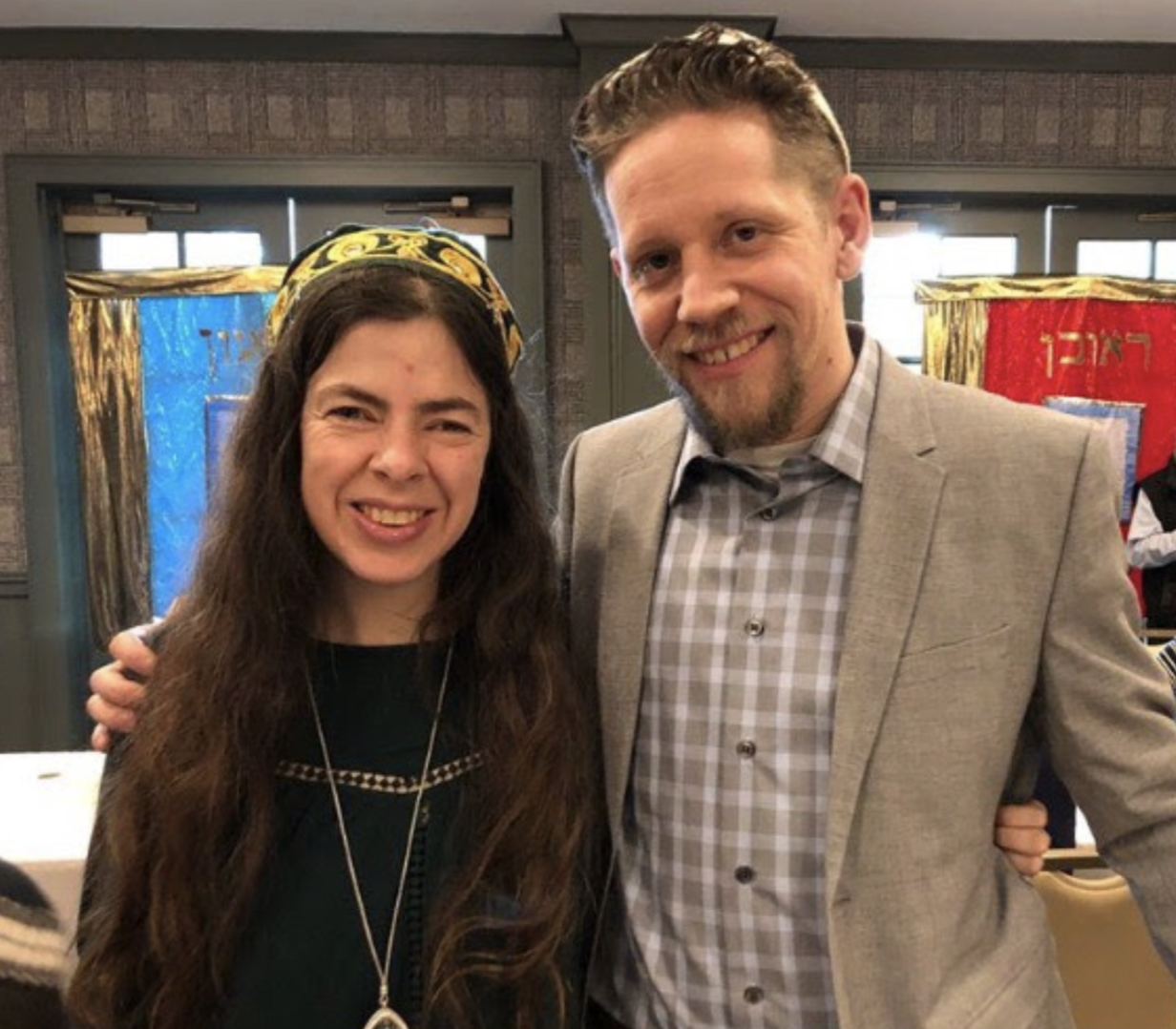
I met Reb Jill in a drum circle. We became close collaborators on several of her books, websites, and ritual projects. My proudest works include our collaboration on the Romemu Siddur and the prayerbook of the Kohenet Hebrew Priestesses.
-
![A selfie of Roshi Bernie Glassman with Shir in Warsaw, Poland]()
Roshi Bernie Glassman
Beloved Bernie started the Auschwitz-Birkenau Bearing Witness Retreats, which I attended and helped facilitate for five years. Practicing the Three Tenets and receiving Council Circle Facilitation training are among the most nourishing practices I have taken on. I am a member of Zen Peacemakers International.
-
![Rabbi Marcia Prager and Shir in front of the Elmen Street house were Reb Zalman used to teach]()
Rabbi Marcia Prager
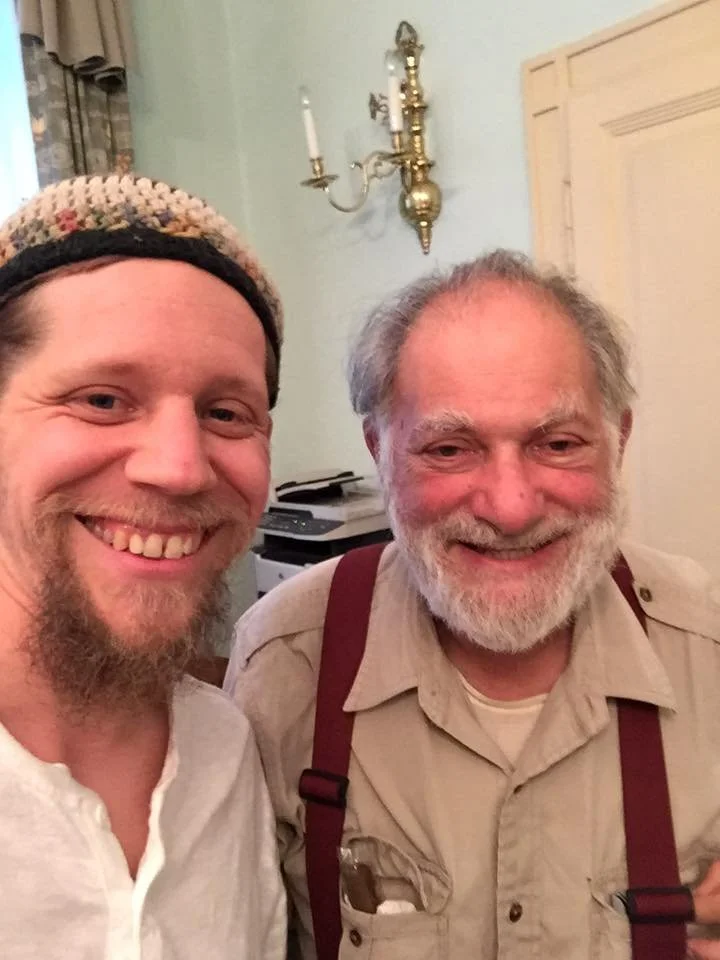
Founding Dean of the ALEPH Ordination Program, I have been deeply enriched by the presence, compassion, and unflagging energy of this master of The Path of Blessing. Reb Marcia entrusted me with co-leading the Davvenen Leadership Training Institute for several years and connected me with many other teachers and students on the path of Renewal.


Current Entanglements
Will Johnson offers a radical path of somatic dharma. His book The Posture of Meditation is the text I most frequently carry on silent meditation retreats. I am a giddy new member of his Shimmering Seahorse and Sea Kelp Sangha.
Tias Little supported me through dark and disorienting free fall with his Somatic Awareness Training for Yoga Attunement and his general Zen- and Iyengar-infused approach to embodied mindfulness. His poetic sensibility and wry humor bring body and soul to life for me in vivid and effervescent ways.
Early yoga teachers include (in approximate chronological order) Elena Brower (vinyasa), Tabby Biddle (Phoenix Rising), and Yogi Charu (yoga nidra). My life-course was altered when I stumbled on a first edition copy of B. K. S. Iyengar’s Light on Yoga. To the countless other yoginis and yogis that I have practiced with and learned from — namaste.
Ward Kerr gave me my first TM mantra and introduced me to “the hugging saint” Amma (Mata Amritanandamayi). Rabbi Marcelo Bronstein brought me to Elat Chayyim for the first time for my first Jewish silent retreat, led by Sylvia Boorstein. That place and those practices would become exceptionally important aspects of my life. There I would meet dozens of fellow soul-travelers, several root teachers, and experience my first plunges into silence, guided by David and Shoshana Cooper. Roshi Barbara Salaam Wegmueller and Anam Thubten guide my heart in sitting practice.
My early childhood education was fostered by the literally back-to-back institutions of the Abraham Joshua Heschel School and Congregation B’nai Jeshurun. My first Talmud teacher (torah she’be’al’peh a/k/a T.S.B.P.) Rabbi Dov Lorea impressed my soul with his deep kindness, commitment, and care. Rabbi J. Rolando (“Roly”) Matalon taught me that rebelliousness and revelation can coexist in a person, and that angels sound like when they chant Torah. Judith Tumin housed me when I was a teenage outlaw and handed me the badge “poet.” Shoshana Jedwab helped launch me as a songwriter and let me never forget that music is food. “Big Al” Rivers made me feel safe, loved, fun, and funny.
Deepening in Jewish renewal and Kabbalah led me to the Everyday Kabbalah and Kabbalah Month-by-Month of Mindy Ribner, who not only guided me in my first formal meditation circle (Beit Miriam) but was also the first person to ask me to lead the Kol Nidre service for Yom Kippur.
His early books on reincarnation in Judaism and the mysticism of music led me to become a close student of Rabbi DovBer Pinson. At Rav DovBer’s table, I met several teacher-friends, including the polymath Jay Michaelson, sacred storyteller Maggid Yitzchak Buxbaum (o.b.m.), and personal trainer Ari Weller. (Recent forays into my strength-training special interest require at least hat-tips to Andrew Huberman, Brent Brookbush, and Kelly Starrett.)
While I have not studied personally with any of these writers, their books have had a significant impact on my thinking and language: Arnold Mindel (process-oriented psychotherapy), Neil Postman (media theory), Ken Wilber (integral theory), Nick Walker (neuroqueer theory), Annika Harris (consciousness studies), and Alan Watts (religion and mysticism).
What’s in a name?
I’ve changed my name. More than once. It might happen again. Here are some of the iterations.
-
My mother was pretty gender expansive when she was considering my name in utero. My sex didn’t matter: if I was dark-haired, I‘d be named Sasha. If light-haired, I’d be Sam. I was born a towhead, so my father’s father’s name was honored.
-
My birth certificate only included my father’s last name but I took it upon myself, starting in Second Grade, to hyphenate and include my mother’s lineage.
-
I wasn’t given a Hebrew name at birth so when it was time for my Bar Mitzvah we needed to craft one. As far as we could tell my grandfathers Yiddish names were Shaya and Yankel. Shaya is close to Shir — which means “song” or “poem” — and Yankel is the Yiddish version of Yaakov. Since I was already an avid tween poet and songwriter, it was a fitting name to be called to the Torah for the first time.
-
“Is it Shir or Shir-Yaakov?” I was asked a million times and I was never sure. I added one of my animal totems to my growing list of monikers — Ariel/אריאל means “lion of God” — as well as trying to add some grounding energy in the form of Moriah/מוריה, the “Mountain of Seeing.” This name is also an acronym combining the three Mother Letters אמ׳׳ש — fire, water, and earth.
-
My teacher Hawks Brother gave me a Lakota name which means “the rain she is my sister.” This naming gives me one of the most deeply experienced senses of feeling seen that I have ever known.
-
When the Russian invasion of Ukraine began I felt the churning pain of ancestral lands suffering under war. In the Yad Vashem testimonial books, I discovered extended family using the “sz” spelling convention. This branch of my family hailed from Soshnykiv, Kyivs'ka oblast, Skalat, Ternopil's'ka oblast, Tarnoruda, Khmel'nyts'ka oblast, and Radomyshl', Zhytomyrs'ka oblast, Ukraine.
-
When uncovering my autistic and nonbinary identities, the gender and struggle of the Yaakov part of my name felt constricting. Two of my grandfathers were named Meir. So the genderqueer juxtaposition of Shir (masc.) with Meira (fem.) felt like an elevation and direction to embrace.